'Uhila Nai | Tohi Kumi Koloa – Ko e tohi fepōtalanoa‘aki pea mo ‘eku fanga kui
27 Feb —
20 Mar 2026
Gallery Two
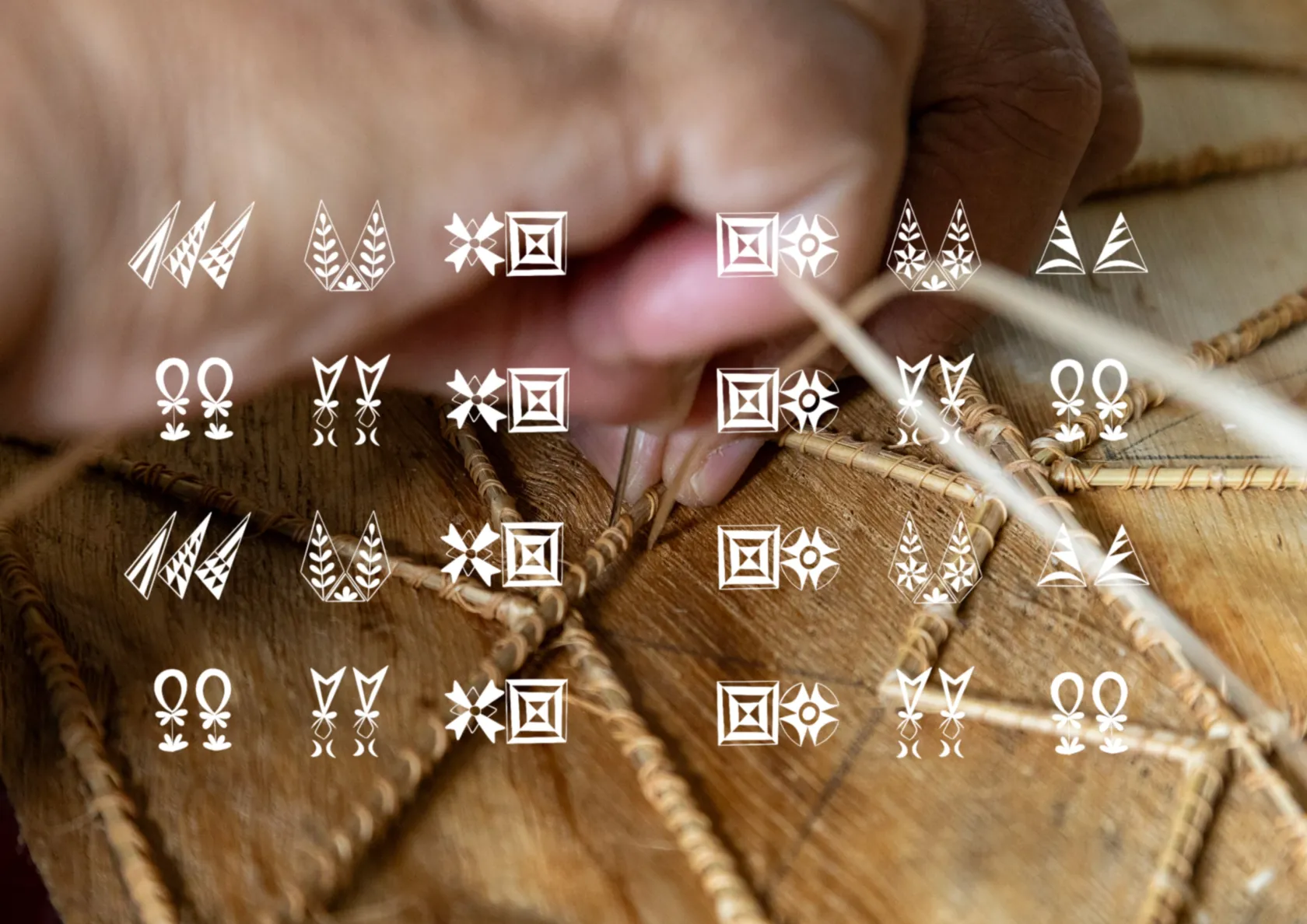
Tohi Kumi Koloa – Ko e tohi fepōtalanoa‘aki pea mo ‘eku fanga kui delves into the Tongan practices of ngatu (barkcloth) and kupesi (embroidered relief stencil) as a lived document of ‘Uhila Nai’s ancestors. The work is grounded in the Tongan way of thinking, making, and doing, while adapting to the present day; a practice that exists within and across the past, Tonga, and the present, Aotearoa New Zealand, as seen in the movement between people, land, and materials.
Central to this research is a personal collection of kupesi inherited from the artists nena (grandmother), ‘Ana Va‘inga Nai, and the hou‘eiki fafine (elder women) from their kautaha (association). As such, ‘Uhila asks “As a maker, how can I tauhi (take care of) all the tukufakaholo (knowledges and practices handed down) my nena left with me?”
This art practice is considered ‘lived research’, in which the methodology is a way of life, and the methods are how she carries herself when working across two different contexts, home in Tonga and here in Aotearoa. The practice draws upon the methodological framework of Tui Kupesi, which comprises four distinct components. These are tokonaki pe tānaki (providing or collecting together), veteki (taking apart), tuiaki (stitching back, collective making), and koloa (the gift). The core methods of veteki (taking apart/unpacking) and liuaki (coming back, going back and coming back) foreground an analytical exploration of a collection of personal kupesi. Through existing documentation, the mark-making speaks to intergenerational knowledge, tukufakaholo, tupu‘anga (place of origin), mape (mapping), fonua (land), ngāue fakataha (working together), and the kāpasa (compass) as a tool for navigating practice.
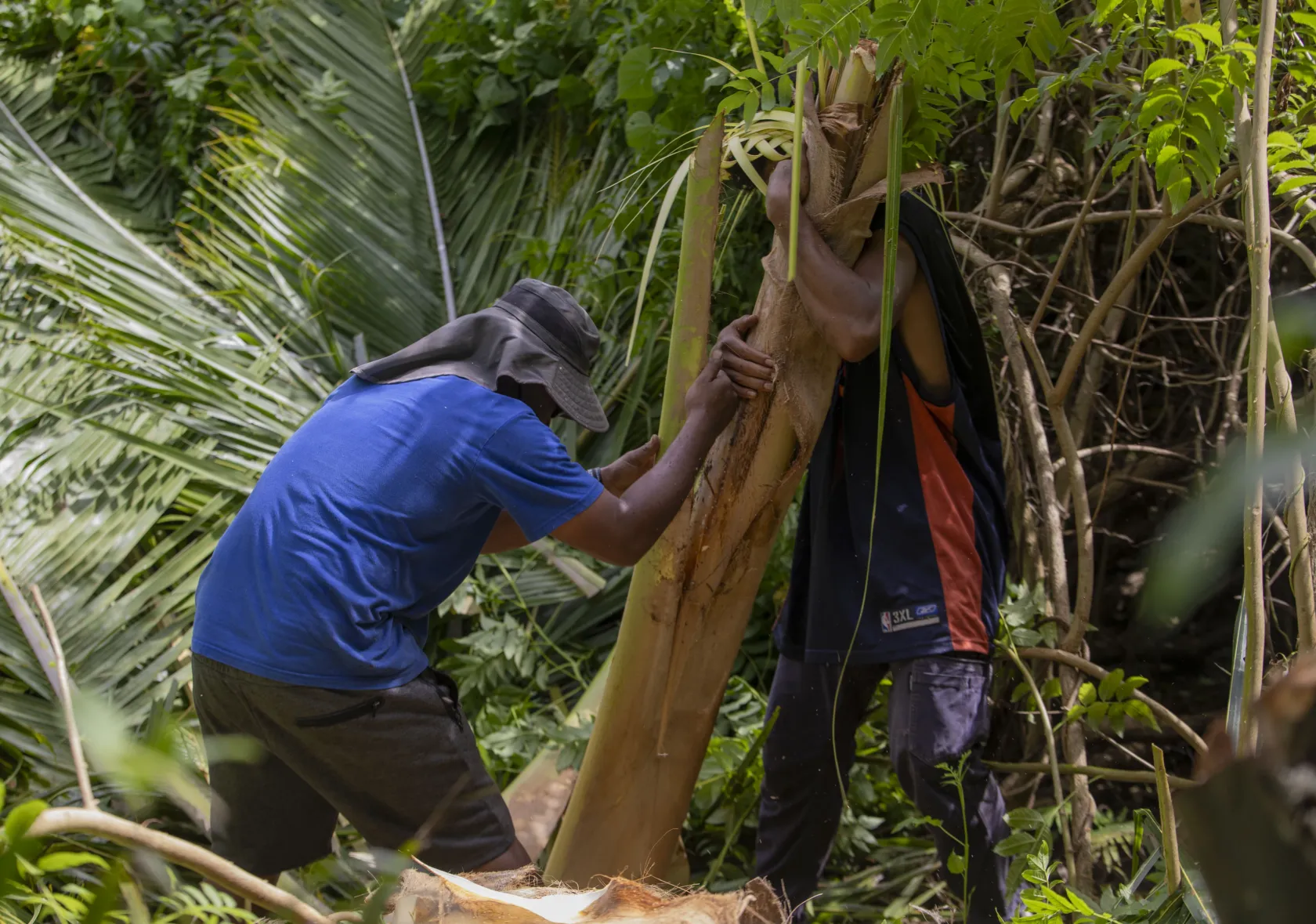
The work unfolds multiple voices of hou‘eiki fafine through liuaki, by observing, listening, and participating in their collective labour – through koka‘anga (production of ngatu making), fepōtalanoa‘aki (in conversation), and ngāue faka‘aho (our everyday life). Utilising traditional processes of ngatu and kupesi through printmaking, installation, sculpture, and scale, the project asks how traditional kupesi can be reinterpreted through a contemporary lens while honouring ancestral knowledge.